
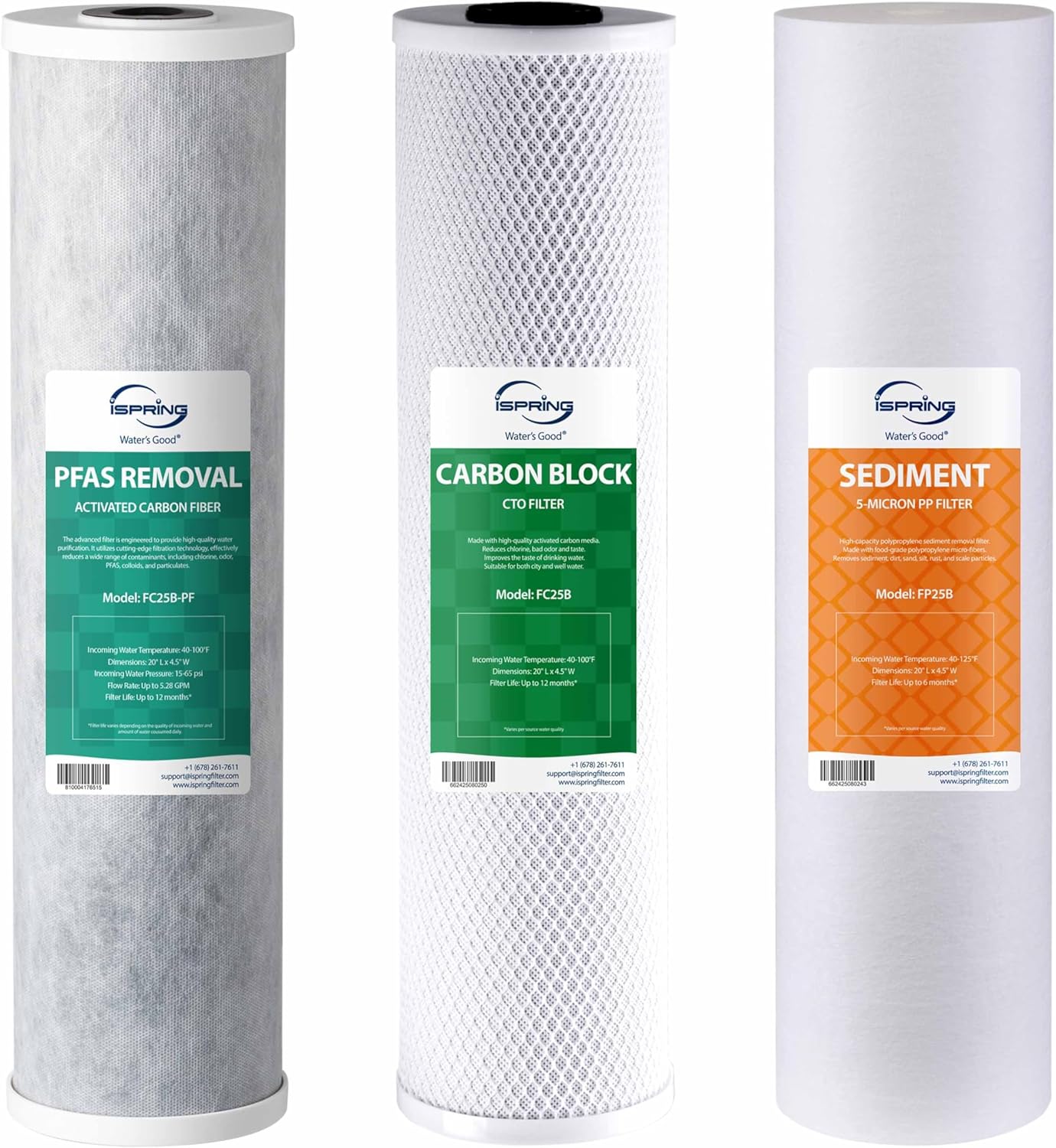
Are you wondering whether the iSpring F3WGB32BPF 3-Stage Replacement Filter Pack for WGB32B-PF Whole House Water Filter System is the right choice for removing PFAS and improving your home water?

Buy ISpring F3WGB32BPF 3-Stage Filter Pack On Amazon
Quick product snapshot
You get a three-stage replacement pack designed specifically for the iSpring WGB32B-PF whole house water filter system. It targets a wide range of contaminants including PFAS (PFOA and PFOS), chlorine, sediment, and tastes and odors while preserving healthy minerals in your water.
What this product is
This is a replacement filter pack with three distinct filter cartridges engineered to work at the point of entry to your home’s plumbing. The third-stage cartridge uses SGS-tested media that iSpring reports can reduce up to 99% of PFAS along with other common chemical contaminants.
Who it’s designed for
This pack is made for homeowners using the iSpring WGB32B-PF system who want a cost-effective PFAS removal solution across every tap. It’s suitable for both city and well water scenarios where sediment, chlorine, or PFAS are concerns.
iSpring F3WGB32BPF 3-Stage Replacement Filter Pack for WGB32B-PF Whole House Water Filter System, Removes up to 99% PFAS, PFOA/PFOS, Chlorine, Sediment, Taste, and Odor
Technical breakdown
You’ll find a clear structure to how contaminants are reduced across the three stages, which helps you understand what each cartridge does and when you should replace them.
| Stage | Filter Type / Media | Primary Targets | Estimated Lifespan |
|---|---|---|---|
| Stage 1 | Sediment filter (spun polypropylene) | Sediment, rust, large particulates | Up to 12 months or as pre-determined by water quality |
| Stage 2 | Carbon block (activated carbon) | Chlorine, chemicals, taste & odor, some VOCs | Up to 12 months |
| Stage 3 | Specialized PFAS removal media (SGS-tested) | PFAS (PFOA/PFOS), additional chemicals, odors | Up to 12 months or 100,000 gallons (whichever comes first) |
Capacity and performance notes
You should expect the full system with these replacement cartridges to handle about 100,000 gallons or roughly 12 months of typical household use, although actual life depends on your water quality and consumption. The filters are intended to be a low-maintenance solution that retains beneficial minerals and does not reduce total dissolved solids (TDS).
Installation and compatibility
Installing these replacement filters is straightforward if you already have the WGB32B-PF housing and system in place. You’ll replace the cartridges inside the housings and follow the manufacturer’s flushing instructions.
What’s in the box
The replacement pack typically contains three cartridges matched to the three stages of the WGB32B-PF system. You’ll receive the sediment cartridge, the carbon block, and the PFAS-specific third-stage cartridge.
Compatibility checklist
Make sure you have the iSpring WGB32B-PF head and housings installed or are prepared to fit these cartridges into that system model. These cartridges are designed for that model; they won’t properly fit unrelated housings or systems.
Step-by-step installation overview
Replace the cartridges one stage at a time, ensuring correct orientation and a proper O-ring seal in each housing. After installation, flush the system as recommended—usually by running water through each stage for several minutes—to clear any manufacturing residue and activate the carbon.

Purchase ISpring 3-Stage Filter Pack (F3WGB32BPF)
Filtration performance: PFAS and beyond
You’re buying this pack primarily for PFAS reduction, and the third-stage media is marketed and tested to reduce up to 99% of PFAS compounds including PFOA and PFOS. In addition, the carbon block removes chlorine and many disinfection by-products, improving taste and odor.
PFAS removal specifics
The third-stage filter uses SGS-tested media, which means the media has been tested by a third-party laboratory for specific reduction performance. If PFAS are a primary concern in your water supply, this cartridge is specifically engineered to address those contaminants effectively when installed and maintained per instructions.
Chlorine, taste, and odor
The carbon block in stage two is well-suited for reducing free chlorine, many organic chemicals, and compounds that cause bad taste and smell. You can expect noticeably fresher tasting water at faucets used for drinking and cooking.
Sediment and particulate control
The spun polypropylene sediment filter in stage one traps visible sediment, rust flakes, and larger particles to protect downstream filters and plumbing. This stage reduces cloudiness and helps maintain flow efficiency by preventing early clogging of the carbon and PFAS media.
Flow rate and water pressure considerations
Whole-house filters will produce some pressure drop, especially as cartridges approach the end of their life or if your water carries a high sediment load. With fresh cartridges and typical household piping, most users report acceptable flow for showers, faucets, and appliances, but heavy-demand households should confirm pressure before and after installation.
Maintenance and lifespan
Keeping the pack performing as advertised requires regular replacement and occasional checks of your filter housings and O-rings. Proper maintenance prevents reduced flow, bypass issues, and degraded contaminant reduction.
Replacement schedule
iSpring recommends replacing the pack every 12 months or after filtering approximately 100,000 gallons, depending on water quality and usage. If your water has high sediment, iron, or a heavy contaminant load, you may need to replace filters more frequently.
Cost and availability
These replacement packs are priced more affordably than many specialty cartridges while providing a targeted PFAS solution. Because they’re made for a popular iSpring model, replacements are widely available through iSpring and major retailers, making long-term ownership convenient.
Checking filter condition
Watch for reduced water pressure, discoloration, or off tastes and odors—those are indicators filters might be clogged or exhausted. You can also mark installation dates and track gallons used if you have a flow meter, which helps you avoid overdue replacements.
Testing and certifications
Understanding the testing behind the PFAS media helps you assess how much confidence to place in the product’s claims. iSpring highlights SGS-tested media for PFAS reduction, which is meaningful but doesn’t replace full-system certification.
What SGS-tested media means
SGS is a recognized third-party testing laboratory that evaluates specific media or cartridges against certain contaminants. SGS testing supports the manufacturer’s claim that the media can reduce PFAS to a certain level under specified conditions.
Certification versus testing
A cartridge can be tested by SGS for specific contaminant reduction but may not be NSF/ANSI certified as a complete system. Certification programs typically evaluate the entire system under standardized conditions. If you need NSF/ANSI certified components, check for those designations specifically on product listings.
How to verify claims in your home
If PFAS removal is critical for your household, consider sending water samples to an accredited lab before and after installation to confirm real-world performance. Many municipal and private labs can test for PFAS, and doing a before-and-after comparison is the most reliable way to validate performance at your point of entry.

Pros and cons
It helps to weigh the benefits against limitations so you can decide whether this replacement pack fits your household priorities.
Pros
- Specifically engineered for PFAS reduction with SGS-tested media, so you’re addressing a tough-to-remove contaminant.
- Three-stage protection addresses sediment, chlorine/taste/odor, and PFAS without removing healthy minerals.
- Long lifespan—up to 100,000 gallons or about 12 months under typical conditions—reduces replacement frequency and maintenance time.
- Compatible with the iSpring WGB32B-PF system and backed by iSpring’s U.S.-based lifetime technical support.
Cons
- Not a reverse osmosis system, so it won’t remove dissolved solids (TDS) or every possible contaminant, and it retains healthy minerals.
- Actual lifespan depends heavily on incoming water quality; heavy sediment or industrial contaminants can shorten filter life.
- Some users may prefer systems with full NSF/ANSI certification for specific contaminants rather than media-level testing alone.
Comparison with alternative filtration approaches
You’ll want to match your filtration choice to the contaminants you care about, budget, and maintenance preferences. This comparison shows how the iSpring replacement pack fits against common whole-home and point-of-use alternatives.
| Filter Type | Typical Target Contaminants | Best Use Case | Limitations |
|---|---|---|---|
| iSpring F3WGB32BPF 3-stage | PFAS, chlorine, sediment, tastes/odors | Whole-home PFAS reduction while retaining minerals | Not a TDS/RO solution |
| Standard carbon-only whole-house | Chlorine, taste/odor, some VOCs | General taste/odor improvement | Limited PFAS removal unless specialized media used |
| Reverse osmosis (point-of-use) | Wide range including TDS, heavy metals | Drinking/cooking water purification | Only point-of-use, wastes water, removes minerals |
| KDF + Carbon whole-house | Chlorine, some metals, bacteria control | Well water with sulfur or iron concerns | PFAS removal depends on media type |
How to choose among these options
If PFAS is your main concern at every tap, a whole-house solution with specialized PFAS media like the iSpring pack is a strong candidate. If you also want very low TDS for drinking water, pair this system with a point-of-use reverse osmosis unit under your kitchen sink.
Who should consider buying this pack?
You should consider this pack if you already own the iSpring WGB32B-PF system or plan to purchase that system and if you’re concerned about PFAS, chlorine, and sediment across all household taps. It’s also a good choice if you want a long-lasting, lower-maintenance alternative to frequent single-cartridge swaps.
Ideal household scenarios
- City water users with detected PFAS or municipal concerns.
- Well water users wanting sediment and chemical control across all fixtures.
- Families that prioritize whole-home protection and want to avoid point-of-use-only solutions.
Buying and installation tips
A few small decisions and checks will improve your experience with the replacement pack and help guarantee performance.
Pre-purchase checklist
Confirm you have the WGB32B-PF housings and head or plan to buy a compatible system. Check your water test results and decide whether PFAS removal is a priority; if TDS reduction is also needed, budget for a complementary RO system.
Installation tips
Always shut off the water and relieve system pressure before opening housings. Lubricate and inspect O-rings during reassembly and follow the recommended flush procedure to remove any loose carbon fines or media dust.
Ongoing maintenance tips
Label the housings with the replacement date and set calendar reminders for 12-month checks. Keep a spare set of replacement cartridges on hand, especially if you’re in an area with inconsistent supply chains or sudden water quality changes.
Common questions and answers
Below are the most frequently asked questions people have when considering this replacement pack and concise answers to help you decide.
Q: Will this pack remove PFAS from my water?
Yes, the third-stage cartridge uses SGS-tested media specifically to reduce PFAS (including PFOA and PFOS). Actual reduction in your home depends on inflow concentration, flow rate, and how current the cartridges are.
Q: Does this filter remove beneficial minerals?
No, these cartridges are designed to retain healthy minerals and do not reduce total dissolved solids (TDS). If you want to remove minerals and TDS, you’ll need a reverse osmosis system at point-of-use.
Q: How often do I need to replace the filters?
iSpring recommends roughly every 12 months or up to about 100,000 gallons, but you may need to replace them sooner if your water has heavy sediment or higher contaminant loads. Monitor flow rate and water quality to determine your ideal schedule.
Q: Is professional installation required?
If you’re comfortable with basic plumbing and installing cartridge housings, you can install them yourself. If you’re unsure about plumbing shutoffs, pressure relief, or sealing housings, hiring a plumber will avoid mistakes.
Q: Are there certifications I should look for?
The media is SGS-tested for PFAS reduction, which is a meaningful third-party test. If you prioritize system-level NSF/ANSI certifications, check the product listing for any certification labels and compare with your needs.
Troubleshooting common issues
If you run into issues after replacing your cartridges, the problems are usually solvable without professional help.
Low water pressure after replacement
Low pressure can come from a clogged cartridge, a missing/bad O-ring, or air trapped in the housings. Check that cartridges are not blocked, re-seat O-rings and housings, and bleed air by opening a downstream faucet for several minutes.
Persistent taste or odor
If taste or odor remain after installing fresh cartridges and flushing as directed, verify you flushed long enough to clear carbon fines and initial media dust. If the issue persists, test your incoming water before and after the filter to identify whether contaminants are downstream of the filter or require a different treatment.
Leaks around housings
Leaking often results from an improperly seated or damaged O-ring. Turn off water, depressurize the housing, then inspect and lightly lubricate the O-ring before reseating the housing and tightening per manufacturer guidance.
Additional tips for maximum performance
Simple habits will keep your system performing well and extend cartridge life.
Seasonal and usage considerations
Heavy water use during summer months or during hosting can shorten filter life; consider replacing cartridges before high-use seasons if you depend on optimal performance. If you detect industrial activity or construction nearby, test water more frequently, as upstream contamination events can affect filter life.
Pairing with other systems
If you need lower TDS or want extra protection for drinking water, pair your whole-house iSpring setup with a point-of-use reverse osmosis unit at the kitchen sink. This gives you PFAS and chemical reduction across the home while delivering ultra-pure water for drinking and cooking.
Final thoughts and recommendation
If you want whole-home PFAS reduction, improved taste and odor, and sediment control without stripping healthy minerals from your water, the iSpring F3WGB32BPF 3-Stage Replacement Filter Pack is a strong, practical option. It combines long service life, targeted PFAS media with SGS testing, and convenient availability, making it a good fit for households that need a point-of-entry solution and prefer lower maintenance intervals.
If PFAS is a top concern for you, pair these cartridges with regular water testing to confirm ongoing performance, and consider an RO unit if you also require low TDS water for drinking. With correct installation and timely replacements, this replacement pack will keep your whole-home water cleaner and more pleasant to use.
Check Price For ISpring F3WGB32BPF On Amazon
Disclosure: As an Amazon Associate, I earn from qualifying purchases.