
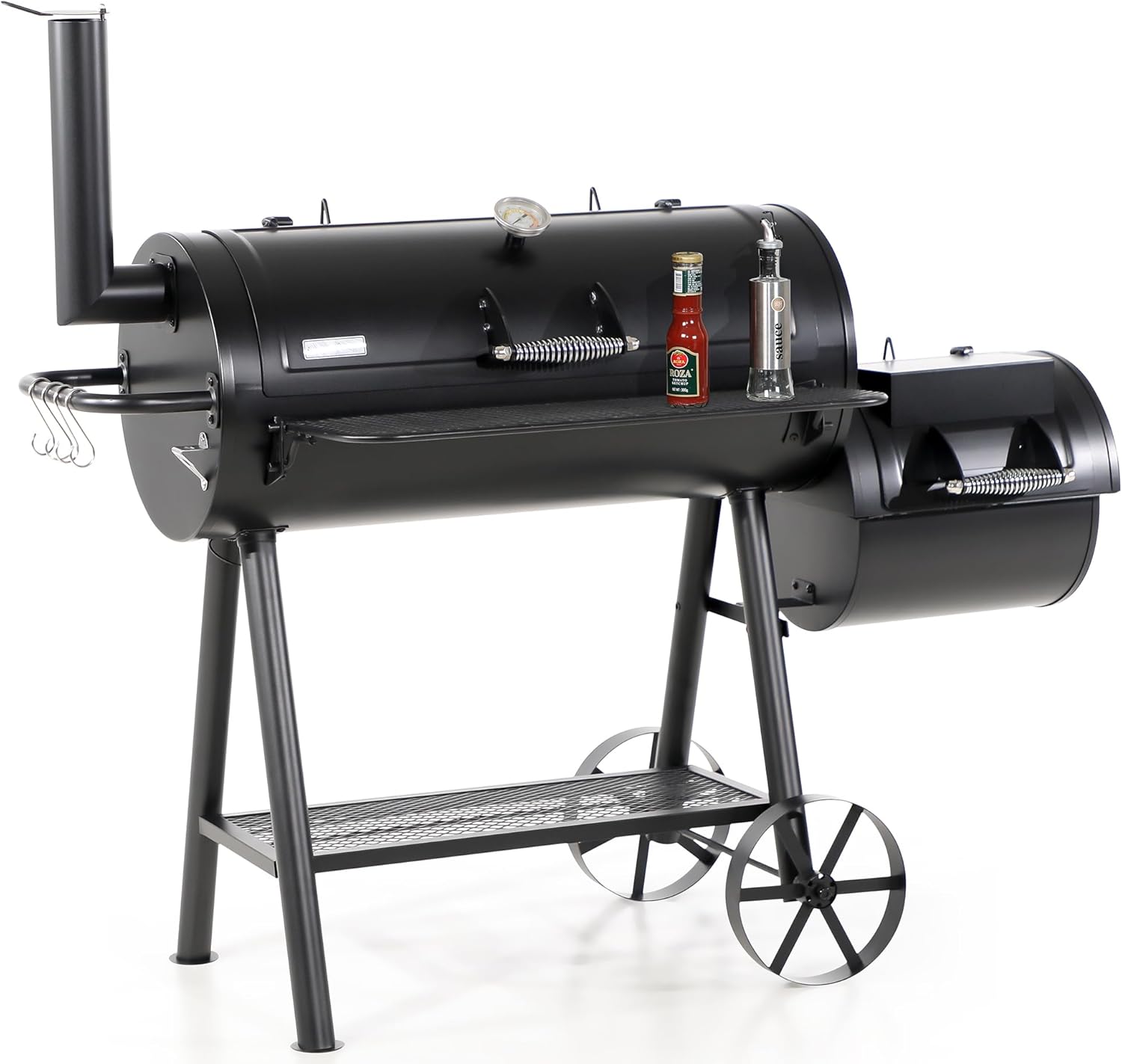
?Looking for a heavy-duty offset smoker that can serve as both a serious smoker and a large charcoal grill for your backyard gatherings?


Product Snapshot: Captiva Designs Heavy Duty Outdoor Smoker, Extra Large Cooking Area (941 sq.in. in Total) Offset Smoker, Best Charcoal Smoker and Grill Combo for Outdoor Garden Patio and Backyard Cooking
You’ll see this model labeled with the very long product name above, and that tells you right away it’s meant to be multifunctional and large. The snapshot below gives you the essentials so you can decide quickly whether to read on for an in-depth look.
Quick summary
You get a total of 941 sq.in. cooking area split across three zones so you can smoke, grill, and keep food warm at the same time. The unit is designed to be heavy-duty with thick steel, an integrated smoking chamber, and options to convert into a charcoal grill when you want direct heat.
Captiva Designs Heavy Duty Outdoor Smoker,Extra Large Cooking Area(941 sq.in. in Total) Offset Smoker, Best Charcoal Smoker and Grill Combo for Outdoor Garden Patio and Backyard Cooking
Key specifications
This section lists the most important specs at a glance so you can compare numbers rather than just impressions. You’ll find the dimensions, weights, and cooking area breakdown helpful if you’re measuring fit for your patio or storage space.
| Feature | Specification |
|---|---|
| Total cooking area | 941 sq.in. |
| Primary smoking area | 551 sq.in. |
| Warm rack area | 198 sq.in. (removable) |
| Offset firebox direct area | 192 sq.in. |
| Body steel thickness | 1.2 mm |
| Lid thickness | 3 mm |
| Total weight | 117 lbs |
| Cooking grates | Enamel |
| Warm rack | Stainless steel |
| Included extras | Charcoal grates for main chamber, grilling grates for firebox |
| Type | Offset smoker with charcoal grill option |
You can use these numbers to evaluate capacity, portability, and heat retention expectations. The split of areas is particularly useful if you’re cooking multiple items simultaneously.
First impressions out of the box
When you first see the smoker unboxed, you’ll notice the significant weight and solid feel immediately. That heft signals thick steel and a build that’s meant to hold heat and stand up to outdoor use.
Packaging and included parts
You’ll probably find the smoker boxed with main components partially assembled and multiple hardware bags. The included charcoal grates and grilling grates are a welcome touch because they let you convert between smoking and grilling without running to the store.
Assembly experience
Putting the smoker together will require some time and patience, and you should have basic tools ready. The instructions are functional, but you’ll appreciate having two people for heavy parts and alignment work.
Time and tools required
Expect roughly one to two hours for assembly if you work steadily and have a helper for the heavy sections. You’ll need wrenches, screwdrivers, and possibly a rubber mallet for aligning bolts and panels.
Tips for smoother setup
Work on a flat surface and lay out parts by type so you don’t accidentally miss a step or fastener. Tighten bolts gradually in a cross pattern where applicable and check seals on door openings for consistent fit.

Build quality and materials
You’ll notice the Captiva Designs smoker is built with thicker-than-average steel, which contributes to weight and insulation. The main chamber and lids are meant to keep heat stable and resist warping over repeated heat cycles.
Steel thickness and durability
The body uses 1.2 mm thick steel while the lids are rated at 3 mm thickness, which helps with structural integrity and heat retention. Thicker lids and bodies reduce hot spots and make temperature control more consistent during long smokes.
Finish and corrosion resistance
Enamel-coated grates and stainless-steel warm racks reduce the amount of scraping and scrubbing you’ll need to do after a cook. You’ll still want to protect the smoker from prolonged rain or salty air to minimize surface rust on bare steel parts.
Design and ergonomics
This smoker is intentionally large and heavy, which benefits cooking performance but affects mobility. The layout with an integrated smoking chamber and offset firebox is designed for classic low-and-slow smoking as well as higher-heat direct grilling.
Integrated smoking chamber vs segmented design
Because this model uses an integrated chamber design, you’ll have fewer leak points for smoke and better retention of wood-smoke flavor. The grooved lid also helps keep smoke circulating inside the chamber instead of escaping too quickly.
Doors, handles, and access
Handles are robust and placed for safe access, and the doors seal well when closed. You’ll find the firebox access convenient for adding fuel and tending the coals without letting too much heat escape from the main chamber.
Cooking areas and capacity
You can manage three separate cooking zones on this unit: the main smoking area, a removable warm rack, and the offset firebox. This lets you smoke a brisket in the main chamber while grilling chicken on the firebox and keeping buns warm above.
Main chamber capacity
The 551 sq.in. main chamber gives you enough space for large cuts—think whole briskets, multiple pork shoulders, or racks of ribs. You’ll have room to arrange meat for even smoking and to avoid overcrowding for better smoke circulation.
Warm rack and firebox capacity
The 198 sq.in. removable warm rack is great for finishing or resting food without drying it out, while the 192 sq.in. firebox area is designed for direct grilling or for feeding hot coals into the main chamber. Together these three areas give you real flexibility during large cook sessions.
Smoking performance and flavor
You’ll get strong smoke performance because of the integrated chamber and grooved lid design that help trap and move smoke across your food. Thick steel also stabilizes temperatures, which means more consistent smoke absorption into the meat.
Temperature stability for long smokes
The heavier steel and lid thickness reduce heat loss, so you’ll spend less time battling wild temperature swings. You’ll still need to practice fire management, but the smoker gives you a stable starting point for low-and-slow sessions that last many hours.
Smoke circulation and flavor penetration
Smoke circulation benefits from the offset firebox placement and the internal spacing of cooking grates. You’ll achieve good bark formation and smoke ring when you use proper wood and maintain a steady temperature.

Grilling performance (charcoal grill mode)
Switching to direct grilling is simple with the included charcoal grates and side firebox setup, and you’ll get a large grilling surface for burgers, steaks, and veggies. The high-temperature capability of the firebox is suitable for searing while the main chamber can act as a warming/indirect area.
Searing and high-heat results
When you want to sear, the firebox concentrates heat well and the enamel grates resist sticking so you’ll get good crusts on steaks. You’ll notice heat distribution is better when you arrange coals in a two-zone setup for direct and indirect cooking.
Using both functions simultaneously
During larger events you can cook direct in the firebox and use the main chamber for low-and-slow items or to keep food warm. This multi-functionality eliminates the need for an additional grill in many backyard setups.
Temperature control and gauges
The smoker comes with built-in dampers and a chimney to help you manage airflow, which is essential for temperature control. You’ll find the included thermometer (if present) helpful for general monitoring, but a set of digital probes will improve precision.
Airflow management
Controlling vents and the firebox intake is the primary way you’ll change temperatures. You’ll adjust fuel, vent position, and damper settings to dial in desired temps, and thicker steel reduces the frequency of adjustments.
Thermometer accuracy and probe advice
The built-in dial thermometer is handy but you’ll want to use at least one probe on the grate and another inside a meat cut for accurate cooking. You’ll get better results using digital probes for long cooks since they give steady, reliable readings.
Fuel types and efficiency
This smoker is optimized for lump charcoal or briquettes in combination with wood chunks or chips for flavor. The heavy construction makes it more fuel-efficient than thin-walled models because it holds heat longer and uses less fuel to maintain steady temps.
Recommended fuels
Use lump charcoal for cleaner burning and faster heatups, briquettes for consistent long burns, and hardwood chunks for smoke flavor. You’ll find fruit woods, oak, and hickory produce differing flavors—experiment to find what you and your guests prefer.
Fuel consumption expectations
For long smokes like brisket, expect to add fuel every few hours depending on your target temperature and ambient conditions. The thicker steel reduces fuel needs slightly, but you’ll still be tending the fire if you maintain low temperatures for 8–12 hours.
Cleaning and maintenance
You’ll need to clean ash and grease periodically to extend the smoker’s life and avoid flare-ups. The enamel surfaces are easier to scrub, but the main body is still steel and will need attention to prevent corrosion.
Routine cleaning steps
Empty the ash pan after each major cook and brush the enamel grates while they’re still warm for the easiest clean. Wipe down the exterior and apply a thin coat of heat-safe oil on bare steel if you expect long idle periods.
Seasonal and annual maintenance
Inspect seals, hinges, and welds yearly and touch up any surface rust with high-temperature paint if needed. Lubricate moving parts and check the chimney and dampers for obstructions before long cook seasons.

Accessories and included items
You’ll get charcoal grates and grilling grates included, which adds immediate value and versatility. The removable warm rack and stainless elements make it more user-friendly right out of the box.
Suggested optional accessories
You might add a digital dual-probe thermometer, a quality grill cover, and a set of long-handled tools to improve your cooking experience. A dedicated ash rake or scoop and a spare set of enamel grates will also save you time during maintenance.
Storage and cover recommendations
A weatherproof grill cover will help prevent rust on exposed steel surfaces and protect the finish. If you can, store the smoker under a covered patio or garage during extended periods of rain or winter to preserve the materials.
Pros — what you’ll like
You’ll appreciate the large cooking area, thick steel construction, and integrated chamber design, all of which translate to better heat retention and flavor. The included conversion grates make it a flexible all-in-one solution for smoking and grilling.
Cons — what to consider
Because the smoker is heavy at 117 lbs, you’ll need help for assembly and moving it into place, and it’s not ideal if you need frequent portability. The exterior steel requires care to prevent rust, and you’ll need to learn fire management for consistent long cooks.
Comparison with competitors
Compared to thinner steel budget smokers, this Captiva Designs unit offers better heat stability and a more professional cooking environment. Against high-end commercial smokers it’s more affordable but may lack some refinements like factory-fitted thermometers of higher accuracy or advanced insulation.
How it stands out
The integrated smoker chamber and grooved lid are features you usually see on pricier models, and they help keep smoke in contact with food longer. You’ll also appreciate the multifunctionality—being able to convert between smoker and charcoal grill is a practical advantage.
Where it may lag
If you want a fully stainless or insulated smoker for extreme long-term outdoor exposure, this model might require more maintenance. You’ll also find that very precise temperature control systems (like PID controllers) are not included and would be an aftermarket upgrade.
Practical cooking scenarios
You can confidently smoke a brisket overnight, roast whole chickens for friends, or run a weekend of burgers and hot dogs on the firebox. The multiple racks let you manage different foods at once and keep sides warm without compromising the main cook.
Weekend smoker plans
Plan for a 10–12 hour smoking session by preparing your fuel strategy, placing wood chunks for smoke, and preheating properly. You’ll find the heavy steel helps reduce the number of times you have to adjust air flow through the night.
Entertaining and party use
When hosting, use the firebox for high-heat finishing or quick grilling while the main chamber keeps large roasts going. The warm rack is great for toasting buns, holding veggies, or keeping cooked ribs at serving temperature.
Troubleshooting common issues
If you experience temperature swings, check seals around doors and the fit of the lid to the body. Poor smoke flavor can be due to wet wood, too much smoke, or insufficient time on the fire—adjust wood quantity and airflow.
Fixing uneven heat
Uneven heat often comes from charcoal placement; rearrange coals for two-zone cooking or use a baffle if needed. You’ll also want to ensure grates are properly positioned and not overloaded with food.
Smoke issues and solutions
If smoke is escaping too quickly, verify the grooved lid alignment and ensure the damper and chimney aren’t fully open. Too much thick white smoke means incomplete combustion—use drier wood and give the coals a chance to catch.
Tips to get the best results
Start with clean grates and a well-established coal bed to avoid long heat-up times. You’ll get better bark and smoke ring by keeping temperatures steady and resisting the urge to open the main chamber frequently.
Fire management tips
Feed small amounts of charcoal or wood at intervals instead of dumping a large batch at once. You’ll maintain steadier temps and produce cleaner smoke by letting coals reach glowing consistency before adding more fuel.
Flavor and wood pairing
Match hardwoods to your protein: fruit woods for poultry and pork, hickory or oak for beef, and mesquite sparingly if you like bold smoke. You’ll find mixing woods can create nuanced flavors—start light and gradually adjust.
Sample cook times and temperature targets
You’ll run the smoker low and slow for most large cuts: 225–250°F for brisket or pork shoulder, often 1.5–2 hours per pound depending on size. Ribs usually take 4–6 hours at similar temps, while chicken and smaller roasts cook faster at slightly higher temperatures.
Example: brisket plan
Set up for 225°F, use oak or hickory chunks for steady smoke, and plan for 10–14 hours depending on size and stall behavior. You’ll probe for tenderness rather than relying solely on time—target an internal temp around 195–203°F for slicing or pull apart tenderness.
Example: mixed party menu
Smoke ribs and a pork shoulder in the main chamber while grilling burgers in the firebox, and keep buns warming on the removable rack. You’ll manage timing by using a temperature chart and starting longer items earlier in the day.
Who should buy this smoker?
You should consider this smoker if you want a robust, multi-function cooker for frequent backyard use and you value heat stability and capacity. If you host large gatherings or enjoy experimenting with smoking and grilling, this model gives you the flexibility and space you need.
Who might look elsewhere
If you need a lightweight, portable cooker for tailgating or camping, this heavy 117 lb smoker will be more burden than benefit. Also, if you require a fully stainless, virtually maintenance-free unit, a premium commercial smoker might better suit your needs.
Warranty and customer support
Check the seller’s current warranty terms and return policy before purchase, because coverage can vary by retailer. You’ll generally find basic warranties on parts and workmanship; keep documentation and photos handy if you need to file a claim.
Post-purchase support tips
Register your product if the manufacturer offers registration and keep assembly photos and receipts. You’ll save time if you need replacement parts or guidance on setups and troubleshooting.
Final verdict
You’ll appreciate the Captiva Designs Heavy Duty Outdoor Smoker for its large total cooking area, heavy-gauge steel construction, and multi-mode capability as both smoker and charcoal grill. If you’re committed to running frequent, large cooks and value smoke flavor and heat stability, this unit gives you a lot of value for the price.
Bottom line
This smoker/gill combo should be on your shortlist if you want a do-it-all backyard cooker with a professional feel and capacity. With a little care, accessories, and practice, you’ll be turning out consistently flavorful BBQ for family and friends.
Frequently asked questions (FAQ)
You’ll probably have questions about fuel, maintenance, and setup; this FAQ answers the most common ones. If your question isn’t covered here, save it for customer support or a dedicated grilling forum where owners share specific tips.
-
How do I prevent rust?
You should keep the smoker dry and use a grill cover or store it under shelter when not in use. Wipe down exposed steel and treat any surface rust promptly with a wire brush and high-temp paint if needed. -
Is the built-in thermometer accurate?
The dial is good for general trends, but you should use digital probes for precise readings. You’ll get best results by monitoring grate temp and meat internal temp independently. -
Can I convert this to propane or electric?
The unit is designed for charcoal and wood; conversion to gas or electric would require significant modification and is not recommended. You’ll get better and safer results using it as intended. -
How many racks does it hold?
You’ll typically have multiple grate levels in the main chamber and the removable warm rack above, allowing you to load several racks of ribs or multiple smaller cuts. Check the exact grate spacing in the manual to plan your rack layout.
If you want, I can generate a printable shopping checklist for accessories, or walk you through a step-by-step brisket cook tailored to this smoker.

Disclosure: As an Amazon Associate, I earn from qualifying purchases.