
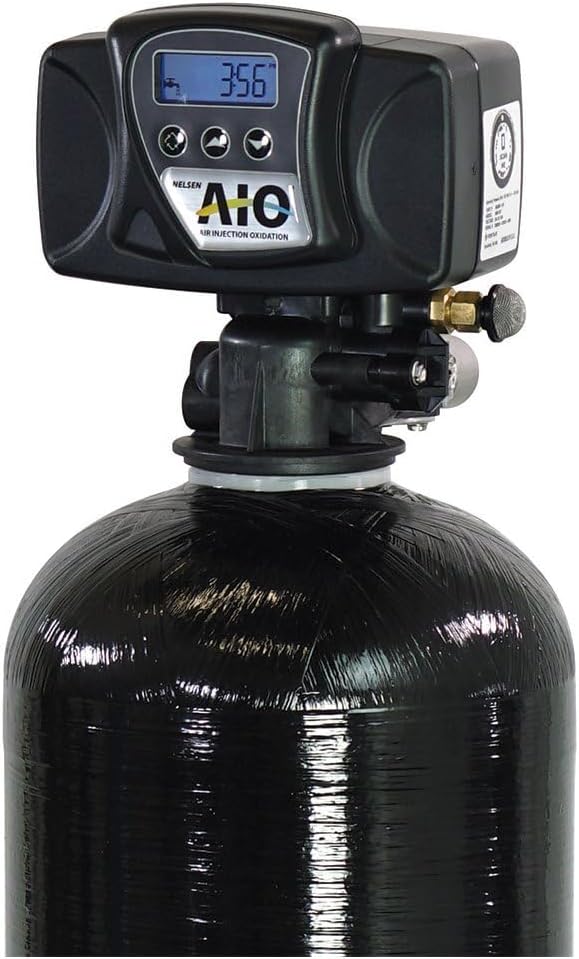
Do you suspect iron, sulfur, or manganese are affecting the taste, smell, or appearance of your water?
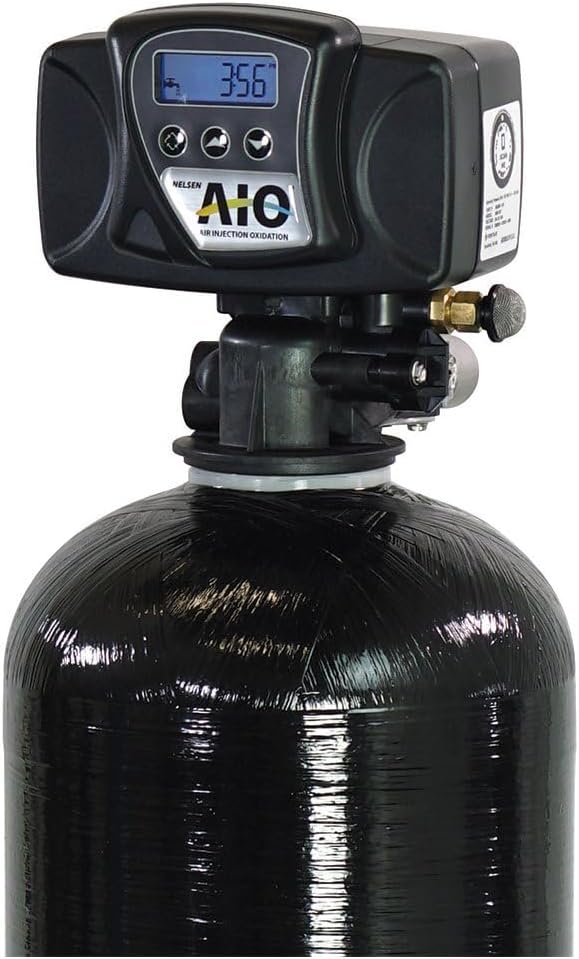
Buy AIS10-25SXT Air Injection Water Filter On Amazon
Product overview: AIS10-25SXT Air Injection Iron, Sulfur, and Manganese Removal Oxidizing Water Filter for Whole House Water Filtration Fleck 5600SXT AIO by Oceanic Water Systems
You’re looking at a whole-house system designed to treat common well-water contaminants like iron, hydrogen sulfide (the “rotten egg” smell), and manganese. The AIS10-25SXT with the Fleck 5600SXT AIO valve is built to oxidize and trap those contaminants in a single tank using an air pocket rather than a separate pump or tank. This setup is intended to simplify installation and reduce moving parts that need attention.
Who this system is for
If you have a household with four or more bathrooms or a family with higher water usage, this system is marketed for you. It’s aimed at average-sized homes on well water that need whole-house treatment for iron, sulfur, and manganese before water reaches taps, appliances, and fixtures. Remember that it does not reduce total dissolved solids (TDS), so it’s not a substitute for reverse osmosis or demineralization when you need mineral reduction.
What it promises
The system promises automated operation via the digital Fleck 5600SXT AIO controller, low maintenance thanks to an internal air-injection design, and media life of around five years on average. You should expect oxidized contaminants to be trapped in the media and flushed away during backwash cycles, keeping the media ready for ongoing treatment.
AIS10-25SXT Air Injection Iron, Sulfur, and Manganese Removal Oxidizing Water Filter for Whole House Water Filtration Fleck 5600SXT AIO by Oceanic Water Systems
Key features and benefits
You’ll want to know what sets this unit apart from other filtration systems. The AIS10-25SXT’s notable features include air injection without a separate pump, the Fleck 5600SXT controller, and a one-tank oxidation-and-filtration process. These features are focused on ease of use, lower maintenance, and a compact footprint.
Air injection in one tank
The air injection design creates a pocket of pressurized air at the top of the tank so oxidation happens in the same vessel where filtration occurs. That means you don’t need a separate AS (air separation) tank or an air compressor. For you, that can simplify space requirements and reduce mechanical points of failure.
Fleck 5600SXT AIO digital controller
The Fleck 5600SXT AIO valve gives you programmable, automatic backwashing based on time or volume. It’s a reliable controller with a familiar interface for many homeowners and dealers. You’ll be able to set backwash intervals that match your water’s contaminant load and your household’s water usage pattern.
Media performance and lifespan
The filter media is designed to oxidize and trap iron, sulfur, and manganese particles. Oceanic Water Systems states the media will last around five years on average and is easy to change when needed. You’ll appreciate that other media can be swapped in if your needs change in the future.
Purchase AIS10-25SXT Air Injection Water Filter — Amazon
Technical specifications and quick facts
You should compare specs to your household demands before buying. Below is a breakdown of the product’s main technical points based on the published product details and typical features of this configuration.
| Specification | Detail |
|---|---|
| Product name | AIS10-25SXT Air Injection Iron, Sulfur, and Manganese Removal Oxidizing Water Filter for Whole House Water Filtration Fleck 5600SXT AIO by Oceanic Water Systems |
| Model number | WWH5600AIO1054 |
| Suitable for | Homes with 4+ bathrooms (average-sized homes) |
| Removes | Oxidized iron, hydrogen sulfide (sulfur odor), manganese |
| Does NOT remove | Total dissolved solids (TDS) |
| Valve/controller | Fleck 5600SXT AIO digital controller |
| Media life | Approximately 5 years (media dependent) |
| Special feature | Air injection without a separate pump or tank |
| Maintenance | Automatic backwash; media replacement as needed |
| Installation | Whole-house; follow installation manual at OCEANICWATER.COM |
How the specification table helps you
This table gives you a quick way to check if basic features match your needs. You should verify the model and media capacity against your peak flow requirements and local plumbing before purchase. Also check OCEANICWATER.COM for the installation manual and larger system options if your home demands a higher capacity model.
How the system works — the process in plain terms
You’ll get a single-tank oxidation and filtration process. Air is injected or trapped at the top of the tank to oxidize iron, sulfur, and manganese. Oxidized particles become larger and are captured by the media bed. During an automatic backwash cycle, the trapped particles are flushed to drain and the media is reconditioned for continued treatment.
Oxidation and filtration in stages
First, contaminants in dissolved form are exposed to the air pocket and oxidize into particulate form. Next, the media captures the particulates within the tank. Finally, the Fleck valve initiates backwash cycles that flush the trapped solids from the media to waste, so the media continues to work effectively.
Why no external pump matters
Because air is created and held in the treatment tank itself, you don’t need to install or maintain a separate air pump. That reduces your upfront complexity and ongoing maintenance steps. The fewer moving components you’re responsible for, the lower the chance of mechanical failure.

Performance expectations
You’ll want realistic expectations about performance. This system is engineered for common well-water contaminant levels seen in many households. It’s effective for the usual ranges of iron, manganese, and sulfur odor. However, extremely high concentrations may require a larger system, pre-treatment, or professional sizing.
What it handles well
The system is optimized for the typical forms of iron (ferrous and some ferric), hydrogen sulfide gas that causes odor, and manganese particles that stain. You should notice reductions in staining, odor, and taste changes caused by those contaminants once properly installed and set up.
Limits and what it won’t do
It will not lower TDS, so you’ll still have dissolved minerals such as calcium and magnesium affecting water hardness. If your water has very high iron or manganese levels, or complex water chemistry (like high dissolved oxygen demand or extreme pH), you should have a water test and consult the manufacturer or an installer for the correct system size and configuration.
Installation considerations
You should plan carefully when installing a whole-house air-injection system. Even though this model reduces complexity by avoiding separate air pumps, you still need appropriate plumbing, a drain for backwash, and enough space for the tank and valve.
Sizing for flow and demand
Calculate your peak demand (simultaneous use of showers, faucets, washing machines, etc.) and compare it to the system’s capacity and your well pump’s output. If the unit can’t keep up with peak flow, you might experience pressure drops. If you’re unsure about flow rates or sizing, get a professional assessment.
Plumbing and drain requirements
You’ll need a drain line for backwash discharge and a bypass valve to allow service without shutting off the house water. The backwash discharge must comply with local plumbing codes, and you should plan the drain route before installation. Make sure the drain can handle intermittent discharges and isn’t connected to a septic soak field that could be affected.
Power and placement
The Fleck 5600SXT controller needs a power source for programming and timing. Place the system in a protected, frost-free location with easy access to the controller and the tank top for maintenance. Also allow clearance so you can remove and replace media when needed.
Setup and programming basics
You should familiarize yourself with the Fleck 5600SXT interface because it controls when backwashes happen and how the system behaves. The controller usually offers time clock and meter-initiated options to match household usage patterns.
Typical programming steps
Set the correct time and date, program the regeneration frequency (time or volume), and set any additional parameters such as backwash duration. If your water has heavy contaminant load, you may need more frequent backwash cycles. The manual at OCEANICWATER.COM should give step-by-step instructions, and a qualified installer can handle the initial setup.
Break-in and initial backwash
After installation and adding media, you’ll run an initial backwash to clear dust and verify flow. The first few cycles are critical to seat the media properly and remove manufacturing fines. You should monitor the first several backwash cycles to ensure drain discharge is clean and the system runs as expected.
Maintenance and expected upkeep
You’ll get an automated backwash function that reduces routine labor, but you still need to perform periodic checks. Media replacement roughly every five years is the average, but actual timing depends on your water quality and usage.
Regular checks you should do
Inspect the drain line and backwash discharge for blockages, check the control display for error messages, and ensure bypass valves are functional. Look for signs of staining or return of odors which could indicate a media issue or failing process.
Media replacement and service
When the media is spent or less effective, you or a technician will replace it. Look for physical signs like renewed staining, reduced odor removal, or loss of effectiveness. Replacing media is typically straightforward, but follow the manufacturer’s guidance or have a pro handle it for peace of mind.
Pros and cons
You’ll want a concise list of strengths and weaknesses to weigh your decision. Below are the primary pros and cons based on the product description and common experience with similar systems.
Pros
- Single-tank air injection reduces the need for extra hardware. You’ll save space and avoid managing a separate pump or tank.
- Automatic Fleck 5600SXT controller simplifies backwash scheduling and reduces manual maintenance.
- Designed for whole-house use, so all fixtures and appliances benefit from treated water.
- Media lasts around five years on average, which minimizes recurring costs.
- Effective at reducing iron staining, sulfur odor, and manganese-related issues in typical well-water conditions.
Cons
- Does not reduce TDS, so it won’t address dissolved mineral content or hardness on its own.
- May not be sized for extremely high iron, sulfur, or manganese concentrations—professional water testing and possibly a larger system may be required.
- Requires a drain and electrical connection for the controller; installation needs some plumbing know-how.
- Backwash produces wastewater that must be handled according to local codes.
Comparing to other options
You’ll find other approaches to treating iron, sulfur, and manganese: chemical injection systems, catalytic carbon, manganese greensand, and chlorine/oxidation followed by filtration. This air-injection system trades off external complexity for a simpler single-tank design.
When to choose this system
If you want a relatively low-maintenance, compact solution that handles common well water issues without a separate air pump, this system could be a good fit. It’s a practical choice for average homes experiencing odor, staining, or manganese-related problems.
When to consider another system
If you have very high contaminant levels, extremely hard water combined with iron, or if you need TDS reduction, consider additional or alternative systems like chemical feed + greensand, catalytic carbon for organics, or RO systems for TDS removal. You might also couple this unit with a water softener if hardness is a problem.
Troubleshooting tips
Things occasionally go wrong, but many issues are straightforward to diagnose and fix. You’ll want to monitor system behavior and note any deviations from expected performance.
Common issues and quick checks
- Persistent odor: Check air pocket integrity and backwash frequency. Odor return can mean media exhaustion or improper backwash settings.
- Staining or discoloration returns: Verify media age and whether the media layer has compacted. Check for bypass valve leaks that let untreated water by.
- Low water pressure: Inspect for clogging in the inlet, head, or a mismatch between system capacity and household peak flow.
- Controller errors: Refer to the Fleck 5600SXT manual; many issues are cleared by resetting or reprogramming the controller.
When to call a professional
If you’re unsure about water test results, need electrical or plumbing modifications, or suspect very high contaminant loads, contact a certified installer. Professionals can test, size, and fine-tune settings for optimal performance.
Installation and safety notes
You should always follow the installation manual and local plumbing codes. The system interacts with potable water, so proper installation ensures safety and compliance.
Safety and compliance
Backwash discharge may contain oxidized metals and must be routed according to local regulations. Avoid connecting discharge to drinking water supplies or systems that could be contaminated. If you have septic systems or specific municipal rules, confirm that intermittent discharge is acceptable.
Permits and inspections
Some jurisdictions require permits for water treatment installations or for modifying plumbing. You should check with local authorities before starting work. A licensed plumber or certified water treatment provider can smooth this process and ensure code compliance.
Buying and warranty considerations
You should check warranty coverage, return policies, and support from Oceanic Water Systems or the seller. Confirm what components are covered—valve, media, and tank—and how to obtain replacement parts or service.
What to verify before purchase
Confirm model number WWH5600AIO1054 matches what you need, check the included components (tank, valve, media, fittings), and ask whether local installation or setup services are available. Verify delivery conditions because tanks and valves can be heavy and may need special handling.
Warranty and support
Review the manufacturer’s warranty terms and the installer’s support options. Keep your purchase receipt and documentation, including the installation manual from OCEANICWATER.COM, for future reference and potential warranty claims.
How to decide if this is right for you
You’ll want to balance your water test results, household water usage, system capacity, and budget. This system is a practical whole-house treatment if your priorities are odor control, stain prevention, and reducing iron and manganese without needing TDS removal.
Steps to decide
- Test your water to measure iron, manganese, hydrogen sulfide, pH, and hardness.
- Calculate peak flow demands and compare with the system capacity or consult an installer.
- Consider whether you need additional treatment like a softener or RO for hardness or TDS.
- Review installation needs (drain, electrical outlet, space) and local codes.
Frequently asked questions (FAQs)
You’ll likely have practical questions—below are some common ones and straightforward answers to help you think through the purchase.
Will this remove the rotten egg smell in my well water?
Yes, it’s designed to oxidize and remove hydrogen sulfide gas that causes the rotten egg smell in many wells. Proper setup and media condition are necessary for good odor control.
Do I need a pre-filter or water softener with this system?
It depends on your water. If you have sediment, a pre-filter protects the media and improves longevity. If you have hardness issues, a separate water softener is typically recommended because this system does not address TDS or hardness.
How often does the system backwash?
Backwash frequency depends on contaminant levels and household usage. The Fleck controller lets you program time-driven or meter-driven regeneration; higher iron loads typically need more frequent backwash.
Can this system be used with city water?
Yes, but it’s usually intended for well water issues. If city water already meets quality parameters or if municipal chlorination is present, the system may not be necessary. Always test and confirm compatibility.
What happens to the waste from backwashing?
Backwash water—containing oxidized iron, manganese, and sulfur—goes to drain. You must route it according to local regulations; some areas have restrictions on discharging water with high mineral content.
Final recommendation and practical next steps
If your well water shows iron stains, persistent sulfur odor, or manganese discoloration and your household fits the 4+ bathroom profile, the AIS10-25SXT Air Injection system is a solid option to consider. It’s designed to reduce maintenance burdens with an integrated air pocket and an automated Fleck 5600SXT controller. Remember that it won’t reduce TDS or hardness, so plan for additional treatment if you need those issues addressed.
Practical next steps for you
- Test your water to get accurate contaminant levels and pH.
- Measure peak flow demand for your household.
- Review the installation manual at OCEANICWATER.COM and confirm local plumbing requirements.
- Decide if you want professional installation or a DIY approach and budget accordingly.
- Purchase the system if the specifications meet your needs, and plan for periodic media replacement about every five years.
If you follow these steps, you’ll be better positioned to get reliable whole-house treatment from the AIS10-25SXT Air Injection Iron, Sulfur, and Manganese Removal Oxidizing Water Filter for Whole House Water Filtration Fleck 5600SXT AIO by Oceanic Water Systems.
Get The AIS10-25SXT Air Injection Water Filter On Amazon
Disclosure: As an Amazon Associate, I earn from qualifying purchases.