
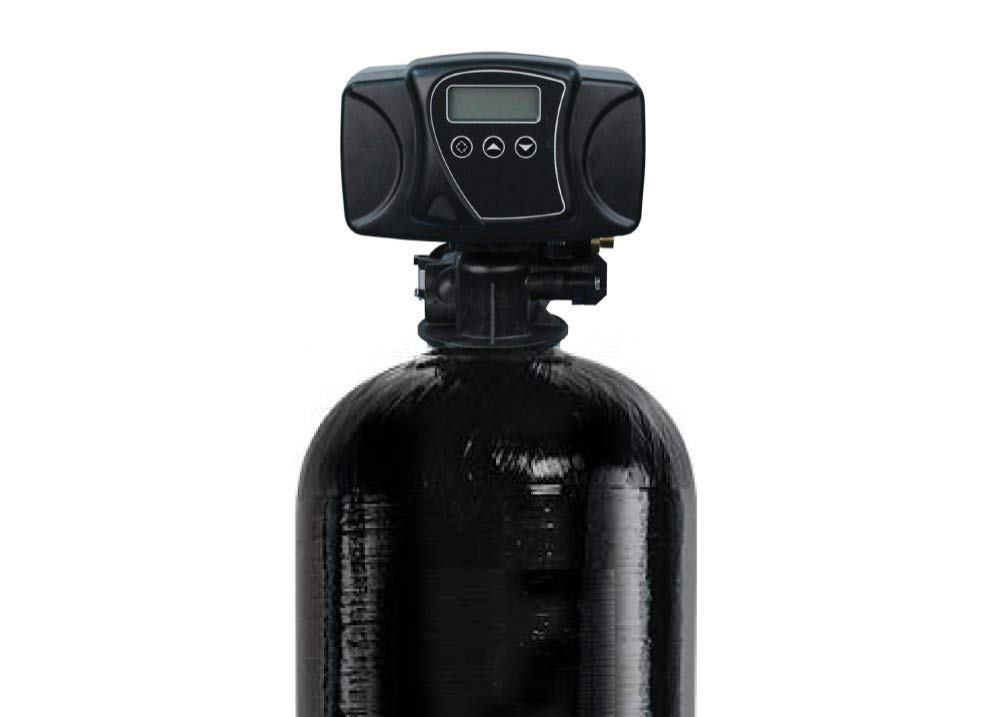
Considering cleaner, fresher water for every faucet in your home with the AIO Air Injection Oxidizing Well Water Filter System | 12″ x 52″ | Iron, Sulfur, and Manganese Oxidizing Water Filter for Whole House Filtration by Oceanic Water Systems?
Buy The AIO Air Injection Oxidizing Well Water Filter System On Amazon
Product snapshot
You want a quick, clear picture of what this system offers and whether it fits your needs. This AIO (air injection oxidizing) system is built for whole-house treatment, designed for homes with 4+ people or 3+ bathrooms, and targets iron, hydrogen sulfide (sulfur), and manganese.
Key claims and what they mean
The manufacturer states removal capacities of iron up to 27 ppm, hydrogen sulfide up to 17 ppm, and manganese up to 11 ppm. Those numbers indicate this unit is capable of handling high contaminant loads commonly found in well water, but actual performance depends on your water chemistry and installation.

What’s in the box and core components
You should know exactly what arrives and the important parts you’ll interact with during use and maintenance. The system ships with the tank (12″ x 52″), the AIO valve assembly, the Fleck 5600SXT digital control head, and pre-filled oxidizing media; other filter media options can be swapped later if your needs change.
The tank and media
The 12″ x 52″ tank holds the special oxidizing media that traps oxidized particles until the next backwash. The media is designed to last roughly five years on average, and when it’s time to replace it, you can swap it yourself or have a pro assist.
The AIO valve and Fleck 5600SXT controller
You’ll interact with the Fleck 5600SXT controller for programming and monitoring backwash cycles, service intervals, and diagnostics. The AIO valve is specially configured to create and maintain an air pocket at the top of the tank so oxidation occurs without an external pump or separate air tank.
Quick specifications table
You’ll find this table useful for comparing basic specifications at a glance. It summarizes the model number, tank size, contaminant limits, controller type, and media life.
| Attribute | Specification |
|---|---|
| Product name | AIO Air Injection Oxidizing Well Water Filter System | 12″ x 52″ (Oceanic Water Systems) |
| Model number | WWH5600AIO1252 |
| Tank size | 12″ x 52″ |
| Controller | Fleck 5600SXT digital automatic backwash |
| Target contaminants | Iron (up to 27 ppm), Hydrogen sulfide (up to 17 ppm), Manganese (up to 11 ppm) |
| Media life | Average ~5 years (media replaceable) |
| Suggested home size | Larger homes — 4+ people, 3+ bathrooms |
| Special feature | Integrated air injection without separate pump or tank |
| Maintenance | Automatic backwash, periodic media replacement |
How the AIO air-injection process works
You’ll appreciate that the system simplifies oxidation by keeping everything inside one tank. During the service cycle, the unit traps a pocket of air at the top of the tank; dissolved iron, manganese, and hydrogen sulfide oxidize as they contact that oxygenated zone and become particulate matter that the media captures.
What the patented piston does
The piston is responsible for forming and maintaining the pressurized air bubble during certain cycles, which keeps oxidation contained inside the tank. That design reduces the need for external pumps or an extra tank and cuts down on moving parts and maintenance complexity.
Why oxidation matters for well water
Oxidation turns soluble iron and manganese into insoluble particles that can be filtered out, and it transforms hydrogen sulfide into a form that can be trapped by media to reduce rotten-egg smell. If you don’t oxidize first, the media can clog quickly or fail to remove contaminants effectively.
Performance expectations in real homes
You’ll get measurable improvements in water color, taste, odor, and staining when the system is matched to your water profile. The stated contaminant ranges (iron up to 27 ppm, hydrogen sulfide up to 17 ppm, manganese up to 11 ppm) mean this unit is suitable for heavy-load well water, though actual removal percentages depend on inlet concentrations, pH, and other chemistry variables.
Flow and whole-house capability
The design targets higher flow needs for larger homes, so you shouldn’t see noticeable pressure drops under normal household usage if the system is sized and installed correctly. If you have unusually high simultaneous demand or very high flow appliances, consult the installation manual or a professional to ensure proper sizing.
What you should test before buying
You should test your raw well water for iron (ferrous and ferric), manganese, hydrogen sulfide, pH, hardness, and any dissolved oxygen or sulfur bacteria concerns. Those results will help you confirm this system is the right fit or whether pretreatment or additional stages are necessary.
Purchase AIO Air Injection Oxidizing Well Water Filter System — Amazon
Installation overview: DIY vs professional
You can attempt a DIY installation if you have plumbing experience, but professional installation reduces the risk of incorrect setup and helps ensure warranty compliance. The AIO system needs correct plumbing orientation, backwash drain hookup, and controller programming.
Basic installation steps you’ll encounter
You’ll position the tank, connect it to your main water line with appropriate fittings and bypass, and route the drain for the automatic backwash. You’ll then set up the Fleck 5600SXT controller timing and regeneration/backwash frequency according to your water usage and contaminant load.
Things that can complicate installation
You may face challenges if your home’s plumbing layout makes it hard to place a 12″ x 52″ tank close to the main line, or if you lack an adequate drain for the backwash volume. Electrical access for the controller and freeze protection in colder climates are also common considerations.
Programming and the Fleck 5600SXT controller
You’ll find the Fleck 5600SXT is a reliable and widely used controller that gives good flexibility for scheduling backwash cycles. It’s user-friendly for basic settings, and it logs diagnostic info that helps with troubleshooting.
Recommended controller settings
You’ll typically set the controller to backwash based on time or volume, depending on how your household uses water and your iron/manganese load. For heavy contaminant levels you may program more frequent backwashes; the product manual and your water test help determine exact timing.
How the controller helps reduce maintenance
The automatic backwash clears the captured oxidized particles and recharges the media bed, so you don’t have to manually clean the tank. This automation reduces downtime and keeps the media functioning close to optimal between media changes.
Maintenance expectations and schedule
You’ll appreciate that this system is described as low maintenance, but it still requires regular attention for long-term performance. Expect periodic checks of the controller, validation of backwash frequency, and media replacement roughly every five years under average conditions.
Media replacement and options
When the media nears the five-year mark (or shows reduced removal efficiency), you’ll replace the media bed; the tank design supports swapping media types if future water changes require different media. You can also choose specialized media for niche problems, but confirm compatibility with the AIO valve and Fleck controller.
Simple maintenance tasks you should do
You’ll check the system for leaks, confirm the backwash drain is clear, and review error codes on the Fleck 5600SXT periodically. Also monitor water quality downstream of the system—if stains or odors return, that indicates media exhaustion or malfunction.
Backwash behavior and drain requirements
You’ll need a properly sized drain and a place to route backwash water, since the system removes trapped contaminants by washing them to drain. The frequency and duration of backwash cycles depend on your water conditions and controller settings.
Environmental and regulatory considerations
You should check local regulations for discharging backwash to septic systems, storm drains, or the municipal sewer—some areas restrict certain discharges. If you’re on a septic system or have limited drainage, you may need to modify the backwash schedule or use a holding tank.
Pros: what you’ll like about this system
You’ll notice cleaner, clearer water that’s less likely to stain plumbing fixtures, clothing, and surfaces when the system works as intended. The integrated air injection system reduces component complexity by avoiding a separate air pump or tank, and the Fleck controller makes maintenance easy.
Efficiency advantages
You’ll avoid extra pumps and tanks, which simplifies installation and reduces long-term mechanical wear. The patent-piston air pocket concept lets oxidation happen inside the tank, resulting in efficient contaminant conversion and trapping.
Convenience advantages
You’ll benefit from the automatic backwash and long media life that limit hands-on maintenance. The system is sized for larger households, so it handles typical whole-house demands without constant user intervention.
Cons and limitations you should know
You should be realistic about limitations: the AIO system treats iron, manganese, and hydrogen sulfide but won’t remove dissolved salts, heavy metals outside its design, or microbiological contaminants. Also, if your water has extremely high levels of organics, suspended solids, or iron bacteria, you may need additional pretreatment.
Situations where performance may be reduced
You’ll see reduced efficiency if your pH is very low or very high, or if your water contains high levels of colloidal or organically complexed iron that resist oxidation. In those cases, a water professional can recommend pH adjustment, cartridge filtration, or other pretreatment before the AIO.
Potential maintenance trade-offs
You’ll still need to manage backwash drain disposal and periodic media replacement, and if you skip those tasks performance will decline. While the system reduces mechanical complexity, it still relies on correct programming and occasional component checks.
Real-world user scenarios
You’ll find this system suits families with staining on laundry and fixtures caused by iron or odor problems from hydrogen sulfide. It’s also a practical choice if you have manganese staining or taste/odor issues from oxidizable contaminants.
Example: family of five with rusty water
You’ll likely see less red/brown staining, clearer drinking water, and fewer complaints about taste when iron loads are within the stated removal range. The high-flow capacity ensures showers and multiple taps can run without excessive pressure loss.
Example: property with sulfur smell
You’ll notice a significant reduction in rotten-egg odors associated with hydrogen sulfide up to the specified concentration when the media and air pocket perform correctly. Persistent odors after installation often point to incorrect sizing, untreated sources, or need for media replacement.
Troubleshooting common issues
You’ll want to know how to respond if the system isn’t meeting expectations; many issues have straightforward fixes. Check the controller logs for errors, verify that backwashes occur, and confirm the presence of the air pocket by following manufacturer instructions.
If staining or odors persist
You’ll first verify inlet water chemistry; if influent levels exceed stated removal ranges or pH is out of acceptable bounds, consider pretreatment steps. If chemistry is within range but symptoms persist, media may be exhausted or the valve could be malfunctioning—both of which can be addressed by service or media replacement.
If you see pressure loss or erratic behavior
You’ll inspect plumbing for blockages, verify the bypass valve position, and check the Fleck controller for configuration or power issues. If necessary, contact Oceanic Water Systems or a certified technician for valve diagnostics since the Fleck head and piston assembly are central to system operation.
When this system might not be the right choice
You’ll want a different solution if your water problems include pathogens (bacteria, viruses), nitrates, fluoride, or dissolved solids that require reverse osmosis or specialized treatment. Also consider alternative approaches if you lack suitable drain access or if your household water demand exceeds the system’s practical flow capacity.
Alternatives for different problems
You’ll look at UV disinfection for microbiological concerns, RO systems for dissolved solids or fluoride, and dedicated iron/sequestration chemical systems if your water chemistry requires them. Combining technologies is common—this AIO can be part of a larger treatment train where needed.
Cost considerations and value
You’ll weigh the upfront cost of equipment and installation against the long-term benefits of reduced staining, better water taste, and less maintenance compared with manual filters. Media life of around five years and automation via the Fleck controller contribute to good value for many households.
Operating costs to expect
You’ll pay for occasional media replacement, minimal electricity for the controller, and water for backwash cycles that remove trapped contaminants. The lack of a separate air pump reduces both initial cost and ongoing mechanical maintenance compared with two-tank systems.
Warranty, support, and documentation
You should check Oceanic Water Systems’ warranty terms and read the included documentation closely to understand coverage limits and recommended maintenance. For larger systems and installation manuals, refer to OCEANICWATER.COM as the manufacturer directs.
When to contact support
You’ll contact support for valve faults, unusual droop in performance, or to confirm replacement media compatibility. Keep model WWH5600AIO1252 and Fleck 5600SXT details handy when calling support for faster assistance.
Comparing to other whole-house oxidizing filters
You’ll find some oxidizing solutions use an external air pump or two-tank arrangements; the AIO’s advantage is one-tank simplicity. Other systems may offer different media options, variable flow capacities, or add-on chemistries, and your choice should depend on your specific water profile and budget.
Pros vs single-purpose filters
You’ll appreciate that this system focuses on iron, manganese, and sulfur removal while providing whole-house coverage; single-purpose filters may be cheaper but often lack the capacity and automation of this unit. If you need multi-contaminant removal including organics or microbial control, you’ll likely combine systems.
Final recommendation—who should buy it
You should consider this AIO Air Injection Oxidizing Well Water Filter System if you have well water with moderate-to-high iron, manganese, or hydrogen sulfide levels and you want automated, whole-house treatment. It’s particularly suited for families of four or more, homes with multiple bathrooms, and anyone who prefers a low-maintenance, single-tank solution.
How to decide next steps
You should get a comprehensive water test and match the results to the system’s stated removal capabilities; if your iron, manganese, or hydrogen sulfide levels fall within the recommended ranges, this system is a strong candidate. If your results fall outside the ranges or you have additional contaminants, consult a water treatment professional to design a complete solution.
Frequently asked questions (short, practical answers)
You’ll likely have a few common questions about lifespan, maintenance, and flow—here are concise answers. Each answer addresses practical concerns to help you plan usage, installation, and long-term upkeep.
How often will the filter media need replacement?
You’ll typically expect to replace the media every five years under average conditions, but heavy contaminant loads can shorten life expectancy. Monitor water quality and consult the manual for guidance.
Do you need a separate air pump or tank?
No, you won’t. The system’s AIO valve and patented piston create and maintain an air pocket inside the single tank, eliminating the need for a separate pump or tank.
Can this system handle my whole house without pressure drops?
It’s designed for larger homes (4+ people and 3+ bathrooms) and should maintain reasonable flow if sized and installed properly. If you have very high simultaneous flow needs, consult sizing specifications or a professional to confirm adequacy.
What if my water has iron bacteria or organics?
You’ll likely need additional pretreatment in those cases, since iron bacteria and certain organics can impair oxidation and clog media. A professional evaluation will identify whether pretreatment (disinfection, cartridge filters, etc.) is required.
Where can you get the installation manual or additional documentation?
You’ll find installation manuals and resources at OCEANICWATER.COM or by contacting Oceanic Water Systems directly for technical support and paperwork.
Closing practical checklist for buying and installing
You should complete a few steps to make a confident purchase and smooth installation. Test your well water, verify drain and space availability, decide on DIY vs professional installation, and keep the model number (WWH5600AIO1252) handy for ordering parts or support.
Quick pre-purchase checklist
You’ll ensure your water test includes iron, manganese, hydrogen sulfide, pH, and general hardness. You’ll also confirm drain access for backwash, location space for a 12″ x 52″ tank, and electrical access for the Fleck controller.
If you follow these steps you’ll be well-prepared to get the most from the AIO Air Injection Oxidizing Well Water Filter System | 12″ x 52″ | Iron, Sulfur, and Manganese Oxidizing Water Filter for Whole House Filtration by Oceanic Water Systems and enjoy clearer, cleaner water throughout your home.
See Price For AIO Air Injection Oxidizing Well Water Filter System On Amazon
Disclosure: As an Amazon Associate, I earn from qualifying purchases.