
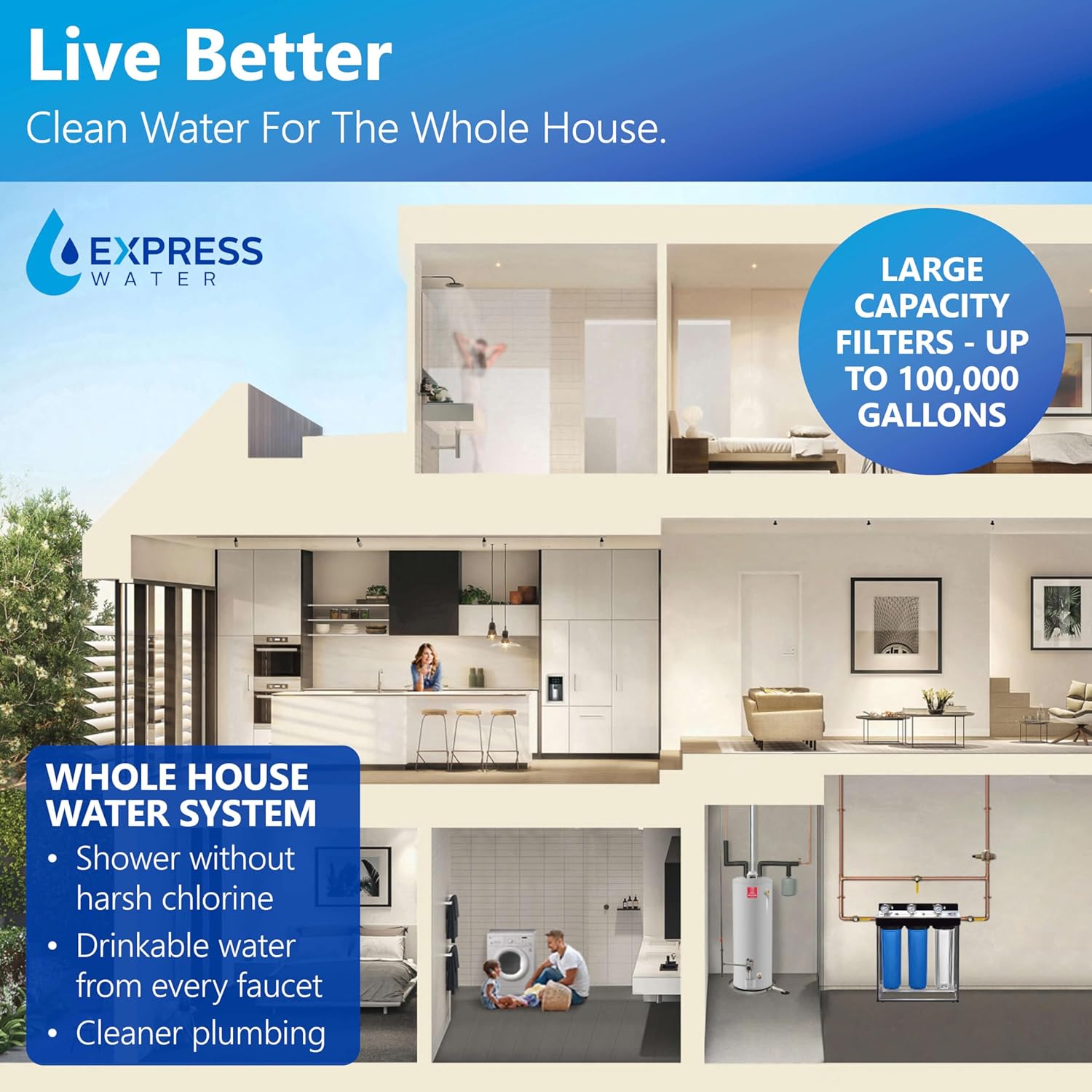
Are you looking for a whole house filtration system that protects your plumbing, improves water taste, and reduces heavy metals and scale at every faucet?


Quick Verdict
You’ll notice clearer, better-tasting water throughout your home soon after installing the Express Water Whole House Water Filter System | ULTIMATE PROTECTION | 3 Stage Home Filtration, Top Tier Heavy Metal + Anti-Scale Filter, Highly Reduces Scale, Chloramine, Chlorine, PFAs, Lead, Arsenic. It’s designed to be a heavy-duty, whole-home solution that balances filtration of contaminants with scale prevention to keep appliances and pipes in better condition.
Express Water Whole House Water Filter System | ULTIMATE PROTECTION | 3 Stage Home Filtration, Top Tier Heavy Metal + Anti-Scale Filter, Highly Reduces Scale, Chloramine, Chlorine, PFAs, Lead, Arsenic
Product Overview
This system is a three-stage whole house filtration system built to treat the water entering your home before it reaches faucets, showers, and appliances. It aims to reduce chlorine, chloramine, PFAs, heavy metals, and scale-causing minerals while offering a durable build and monitoring features to simplify maintenance.
What’s Included
You’ll get the three filter housings mounted on a heavy duty stainless steel bracket and a free-standing frame, plus the three corresponding filter cartridges. The system also includes pressure release buttons and gauges for monitoring, and mounting hardware to secure it near your main water inlet.
Key Features at a Glance
You can use this table to quickly scan the most important specifications and functions of the system.
| Feature | What it Means for You |
|---|---|
| Configuration | 3-stage whole house filtration (sediment + carbon/heavy metal + anti-scale) |
| Flow Rate | 0.25 gallons per second at 45–80 PSI (≈ 15 gallons per minute) — suitable for most homes |
| Connection Size | 1″ inlet/outlet for high flow and compatibility with typical home plumbing |
| Filter Life | Replace every 6–12 months or ~100,000 gallons depending on use and inlet water quality |
| Reduces | Chlorine, chloramine, PFAs, heavy metals (lead, arsenic, chromium, mercury, cadmium), sediment, scale |
| Does Not Reduce | Total Dissolved Solids (TDS) — not a substitute for a RO system |
| Construction | Stainless steel bracket, pressure gauges, pressure release buttons |
| Anti-Scale | Laboratory-packed polyphosphate cartridge to inhibit scale formation |
| Special Notes | Designed for whole-home protection, not for drinking-water TDS reduction; consider RO systems if you need TDS reduction |

Filtration Technology
You’ll get three stages that address sediment, chemical contaminants including chlorine and chloramine, and scale. The combined approach aims to protect both your health and home infrastructure.
Stage 1: Sediment Pre-Filter
The first stage typically contains a sediment filter to trap sand, dirt, silt, and larger particles. This protects downstream filters and appliances from abrasive particles and helps maintain flow and lifetime of the subsequent filters.
You’ll notice less visible cloudiness and fewer particles in water fixtures after Stage 1, which also lowers the load on the carbon/metal filter.
Stage 2: Carbon/Heavy Metal Filtration
The second stage is focused on chemical adsorption and heavy metal reduction, using a carbon-based or specialty media designed to reduce chlorine, chloramine, PFAs, and certain heavy metals like lead and arsenic. The media aims to reduce taste and odor issues while targeting contaminants that are increasingly present in some municipal and well water supplies.
You’ll likely see improved taste and odor, and reduced chemical smell in showers, laundry, and drinking water (though you may still choose to use a dedicated point-of-use RO or carbon system if you want the absolute lowest TDS or more aggressive contaminant removal).
Stage 3: Anti-Scale Polyphosphate
The third stage uses laboratory-packed polyphosphate designed to sequester scale-causing minerals or inhibit scale formation. That protects appliances such as water heaters, dishwashers, and washing machines from mineral deposits that shorten their lifespan and reduce efficiency.
You’ll notice reduced scale buildup on fixtures and longer-lasting appliance performance, particularly if you previously experienced hard water problems.
Installation and Setup
You can install this system at the main cold water inlet to treat all water entering the home. The stainless steel bracket and included mounting hardware make positioning straightforward, and the pressure gauges and release buttons make service easier.
Tools and Time Required
Expect to need basic plumbing tools like a pipe cutter, wrenches, thread seal tape (Teflon), and possibly adapters for the 1″ connections. Installation time typically ranges from one to three hours depending on your plumbing access and experience.
If you’re not comfortable working with plumbing or your main line is complex (copper, PEX, or other hard-to-access piping), consider hiring a licensed plumber to ensure leak-free installation and local code compliance.
Step-by-Step Installation Overview
- Shut off the main water supply and drain the lines to reduce pressure. You’ll want valves open or a drain point to clear the system.
- Choose a mounting location near the main inlet with enough space to remove filters. You’ll need room to change cartridges and read gauges.
- Mount the bracket and secure the housings in the desired orientation. Make sure it’s level and accessible.
- Cut into your main line and attach the 1″ fittings using the proper adapters and thread sealant. You’ll want to confirm flow direction aligns with the arrow on the housings.
- Install filters in the housings and hand-tighten, then open the main water slowly and check for leaks. Use the pressure gauges to verify normal operating range.
- Flush the system according to the instructions—this typically involves running water through each stage until it clears. You’ll release trapped air using the pressure release buttons.
You’ll be glad you took time to double-check fittings and drains during the first pressurization; small leaks are easier to fix before everything is tightened down.

Performance and Water Quality
You’ll see multiple benefits once the system is online: improved taste and smell, fewer visible particles, reduced scale, and lowered exposure to heavy metals and certain chemical contaminants. These effects will vary based on your incoming water quality.
Taste and Odor Improvement
Chlorine and chloramine are common causes of bad tasting or smelling water. The second-stage media targets those compounds, so you should experience noticeable improvements in drinking water, shower smell, and laundry results.
You may still prefer an additional point-of-use filter for drinking water, but for whole-home taste and odor control, this system makes a meaningful difference.
Scale Prevention and Appliance Protection
The polyphosphate cartridge helps to stabilize minerals so they’re less likely to form hard scale deposits. Over time, you’ll likely need less descaling for your water heater and faucets, and appliances should run more efficiently.
You’ll still have dissolved minerals in water—polyphosphate doesn’t remove hardness, but it reduces the scale formation that causes visible and operational issues.
Heavy Metals and Contaminants
This system is designed to significantly reduce heavy metals like lead, arsenic, chromium, mercury, and cadmium, as well as PFAs and other contaminants often tied to industrial runoff or older infrastructure. It’s a comprehensive approach for point-of-entry protection.
You’ll want to verify removal levels with your local lab or test kit if you need precise quantification, and remember this system does not reduce TDS overall.
Maintenance and Filter Replacement
Routine maintenance is straightforward, thanks to pressure release buttons and gauges that help you monitor when it’s time to service the system. Filters should be replaced at intervals based on your usage and water quality.
Filter Lifespan and Indicators
Express Water advises replacing filters every 6–12 months or every roughly 100,000 gallons, which will vary with your household size and incoming water contaminants. Pressure gauges give you a useful sign: rising pressure differentials across the stages indicate a filter approaching end-of-life.
You’ll also notice changes in taste, odor, or diminished water pressure if cartridges are clogged—these are signs to change filters sooner rather than later.
How to Change Filters
- Turn off the water supply to the system and relieve pressure using the pressure release buttons.
- Remove the housings by loosening them (the free-standing frame and stainless bracket make this easier).
- Replace the cartridges with new, properly matched filters, making sure O-rings are seated and lubricated if recommended.
- Reinstall housings, slowly open water supply, and check for leaks. Use pressure gauges to confirm normal operating pressure.
- Flush each stage briefly to remove any loose media or sediments from the replacement cartridges.
You’ll find that routine cartridge swaps become faster with practice, and the built-in gauges speed up troubleshooting when performance drops.

Monitoring and Built-in Features
You’ll value the deluxe features that make maintenance easier and provide peace of mind. The system includes pressure gauges and release buttons that simplify filter changes and diagnostics.
The stainless steel bracket and free-stand frame help with stable mounting and accessibility. You’ll appreciate the ability to see pressure at a glance and to vent housings safely before opening them.
Flow Rate and Household Suitability
With a 1″ connection and a rated flow of 0.25 gallons per second at 45–80 PSI (about 15 gallons per minute), this system is suitable for most single-family homes, even those with simultaneous multi-fixture use.
If your household frequently runs multiple high-demand fixtures at once (multiple showers + dishwasher + laundry), you’ll still generally be covered, but confirm your peak demand flow and incoming pressure to ensure consistent performance.
Pros and Cons
You should weigh strengths against limitations before deciding if this system fits your needs.
Pros:
- Provides whole-house filtration for all faucets, protecting plumbing and appliances.
- Targets chlorine, chloramine, PFAs, and a range of heavy metals.
- Anti-scale polyphosphate reduces scale buildup, protecting appliances and fixtures.
- Robust hardware: stainless steel bracket, pressure gauges, and release buttons for easier maintenance.
- High flow capacity (≈15 GPM) suitable for many homes.
- Clear, straightforward maintenance schedule (6–12 months or ~100K gallons).
Cons:
- Does not reduce Total Dissolved Solids (TDS) — not a replacement for reverse osmosis if you need low TDS water.
- Actual contaminant removal efficiency may vary depending on media type, contact time, and inlet water quality.
- Polyphosphate does not remove hardness; it only inhibits scale formation.
- Replacement cartridges represent ongoing cost and must be monitored and replaced on schedule.
- If your water has unusual contaminants or very high levels of a specific contaminant, you may require additional or different treatment.
You’ll get the most value if you pair this system with pre-install water testing so you can confirm which contaminants are present and match filtration to your needs.
Comparison to Alternatives
Choosing the right home water treatment depends on what you need to remove and how you want to protect your plumbing and appliances.
When to Choose This System vs a Reverse Osmosis (RO) System
Choose the Express Water ULTIMATE PROTECTION if your goal is whole-home treatment—improving taste and odor, reducing chlorine, and protecting appliances from scale and heavy metals at every faucet. This system treats all water entering the home so every fixture benefits.
Choose RO if you need low TDS drinking water or microscopic contaminant removal (e.g., to achieve specific ppm levels). RO systems are point-of-use and excellent for drinking water, but they don’t protect appliances or provide whole-house treated water.
You’ll often find the best setup is a combination: a whole-house system for general protection and an RO or under-sink filter for drinking water.
When to Choose a Water Softener Instead
Choose a traditional ion-exchange water softener if your primary problem is hardness causing soap scum, dry skin, and excessive scale that polyphosphate can’t address. Softening actually removes calcium and magnesium (exchanging them for sodium or potassium), which reduces hardness symptoms more thoroughly than polyphosphate.
You’ll benefit from a softener when you need dramatic improvements in soap performance, lathering, clothing longevity, and reduction of hard-water spotting. The Express Water system is more of a preventative anti-scale measure and chemical contaminant filter rather than a full hardness removal solution.
Cost Considerations
You’ll have two parts to your cost: initial investment and ongoing replacement filter costs.
Initial costs include the system and any professional installation fees if you opt for a plumber. Ongoing costs include replacement cartridges—three per replacement cycle—and the occasional O-ring or seal. Exact dollar amounts vary, but plan for annual maintenance costs based on your filter replacement frequency and local filter prices.
You’ll save on appliance repairs and energy efficiency losses if the system prevents scale buildup, which can offset the filter replacements over time. Running a cost comparison that includes avoided maintenance and longer appliance life often favors whole-house protection if your water quality would otherwise cause damage.
Frequently Asked Questions
You’ll likely have practical questions before you buy or install. Here are common ones with concise answers.
-
Will this system remove 100% of lead and arsenic?
No filtration system guarantees 100% removal for all contaminants. The system is designed to significantly reduce lead, arsenic, and other heavy metals, but removal efficiency depends on cartridge type, water chemistry, and contact time. For exact removal rates, consult lab testing results or request third-party performance data. -
Does it remove all hardness from my water?
No. The system uses polyphosphate to inhibit scale formation but does not remove hardness minerals (calcium and magnesium). If you need full hardness removal, you should consider a water softener. -
Do I still need a drinking-water filter?
It depends on your expectations. This system improves taste and removes many contaminants, but for lowest TDS and the most thorough removal of certain dissolved contaminants, a dedicated RO or point-of-use filter is recommended for drinking water. -
How will I know when to change the filters?
Replace cartridges every 6–12 months or about 100,000 gallons depending on usage and water quality. Pressure gauges and declining water quality indicators (taste, odor, pressure) will also suggest it’s time for a change. -
Can I install it myself?
If you’re comfortable with basic plumbing and have the right tools, yes. Otherwise, hiring a licensed plumber ensures the system is installed correctly and safely and that it meets local plumbing codes. -
Will the system reduce PFAs?
The media is designed to significantly reduce PFAs, but removal efficiency depends on your specific water chemistry and contaminant levels. For definitive results, test your water before and after installation.
You’ll find that addressing these FAQs before purchase helps set realistic expectations about performance and maintenance.
Final Thoughts
If you want whole-house filtration that balances contaminant reduction and scale prevention, the Express Water Whole House Water Filter System | ULTIMATE PROTECTION | 3 Stage Home Filtration, Top Tier Heavy Metal + Anti-Scale Filter, Highly Reduces Scale, Chloramine, Chlorine, PFAs, Lead, Arsenic is a practical and robust option. It’s built for homeowners who want protection at every faucet and want to protect appliances and plumbing from scale and harmful contaminants.
You’ll still want to test your incoming water to confirm the best filter combination and consider a point-of-use RO if lowering TDS for drinking water is a priority. With proper installation and regular maintenance, you can expect noticeably improved water quality and reduced long-term maintenance costs on appliances and plumbing.

Disclosure: As an Amazon Associate, I earn from qualifying purchases.